Every barbershop runs on sayings passed down like weather lore. Train your hair and it will lay where you want. Shave it and it grows back thicker. Cut it and it grows faster. Some of these hold a kernel of truth, some are flat wrong, and the difference matters when you are trying to move a part, fight a cowlick, or grow a style out in Mint Hill.
This is a practical sorting. Each claim gets a verdict, then the steps that actually work if you want your hair to sit differently than it does today.
Myth one: hair learns a part with training
Verdict: mostly false, with a useful exception. Hair has no memory. The direction hair leaves the scalp is set by the angle of the follicle, and that angle does not change because you combed the hair the other way for a month. What does change is how the hair behaves above the scalp. Longer hair has weight, and weight pulls a style into place. Repeated heat styling and product use can also make hair temporarily more compliant, until the next wash resets it.
The exception is at short lengths. When hair is very short, it stands in its growth direction because there is not enough length to bend. As it grows, the same hair can be persuaded. So a new part often fails in week one and works in week five, not because the hair learned, but because it finally got long enough to lay over.
Myth two: cutting makes hair grow faster and thicker
Verdict: false. Growth happens at the scalp, roughly half an inch a month for most adults, and cutting the ends does not signal the follicle to do anything. The thicker feeling after a cut is real but misleading: a freshly cut end is blunt, while a worn end tapers thin, so the cut hair feels coarser in your hand. Shaving works the same way. The regrowth is the same hair with a blunt tip.

Myth three: a cowlick can be trained away
Verdict: false, but it can be managed. A cowlick is a spiral growth pattern, most common at the crown and the front hairline. It will not unwind. What works is length, weight, or going with it. Cutting a cowlick very short in defiance usually makes it stand straighter. Leaving length on top lets the hair fall past the swirl. Many classic cuts quietly build the part around the cowlick instead of against it, which is why a good barber studies your head dry before touching the clippers.
How to actually move a part
- Start with length. Give the top at least a couple of inches beyond your current cut before judging a new part. Short hair answers to the follicle, not the comb.
- Find the natural break. Wet the hair, comb it straight back, then push it forward gently. Where it splits on its own is where a part will hold with the least fight.
- Set the part while damp. Hair takes its set as it dries. Comb the new part in right after washing, apply a small amount of product, and let it dry in that position.
- Use low heat if you use a dryer, aimed in the direction of the new part. Heat speeds the set but daily high heat dries the ends, so it is a tool, not a habit.
- Give it three to four weeks of consistent styling before deciding. Judge it at the end of that window, at your normal length, not on day two.
- Bring a photo to your barber at 218 Barber Shop and ask for the top to be cut to support the part: slightly longer on the heavy side, cleaner on the short side. Cutting for the part does more than combing for it.
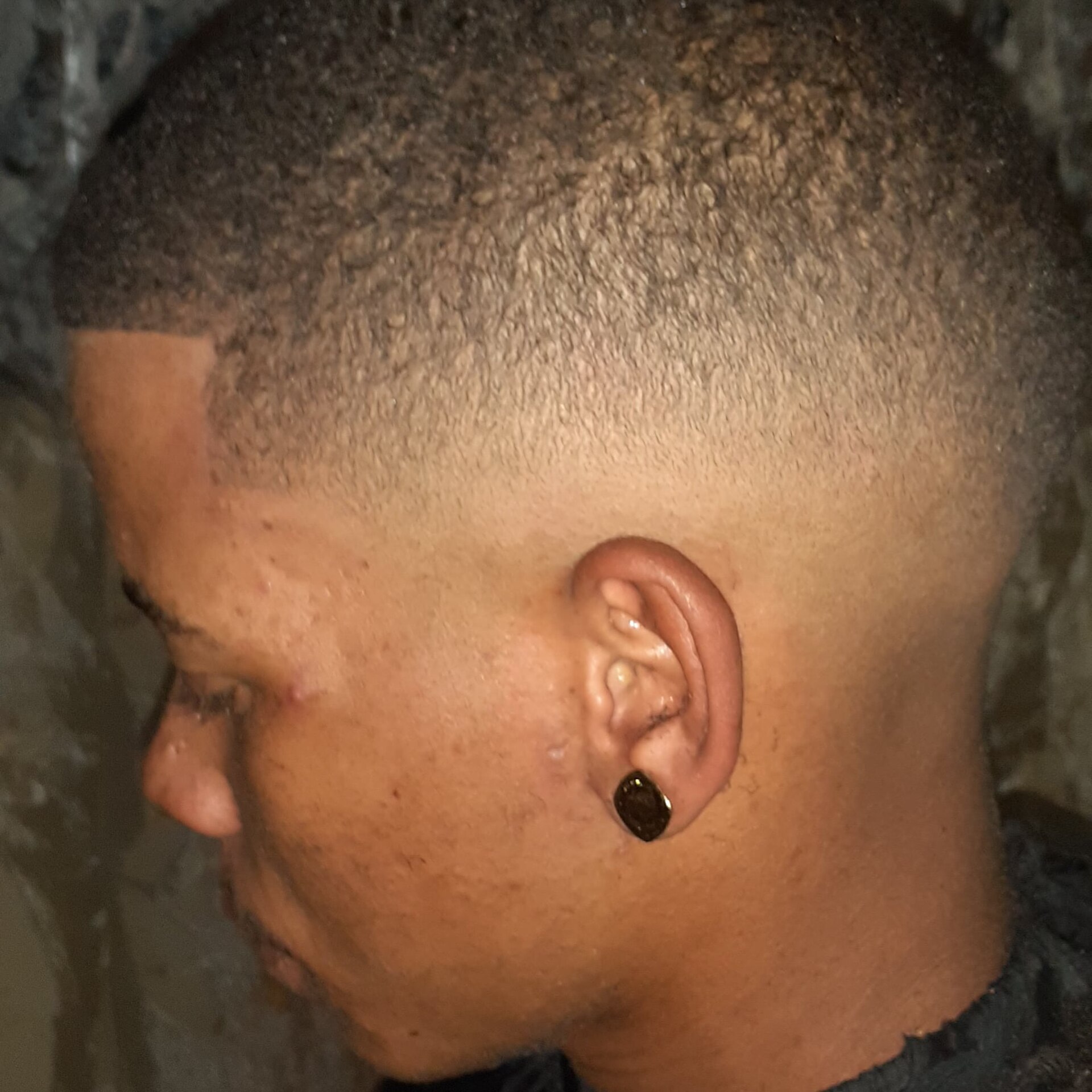
Myth four: more brushing makes hair healthier
Verdict: it depends. Brushing distributes scalp oil along the strand and can help dry hair look better, but aggressive brushing on wet hair, when strands stretch and snap most easily, causes breakage. If your hair is breaking at the front or the part line keeps widening, look at your brush habits before you blame the cut.
Common questions
How long does it take for a new part to hold?
Usually three to four weeks of consistent styling at sufficient length. If the part still springs back after that, the follicle direction is winning and the part should move to the natural break.
Can a barber cut hair to make a part easier?
Yes. Leaving weight where the part needs support and reducing bulk where it fights the direction makes a real difference, more than product alone.
Why does my hair part itself in the middle when I grow it?
Many men have opposing growth directions on each side of the crown. At length, the hair falls away from that center line on both sides, which reads as a middle part.
Photos in this guide are representative stock images.
← All guides from 218 Barber Shop← Back to 218 Barber Shop